The Renovation Starts Monday. Your Homeowners Policy Needs to Hear About It First.
A major renovation changes the risk your policy was priced for. Here's what to tell your broker, what to require from contractors, and what to document.
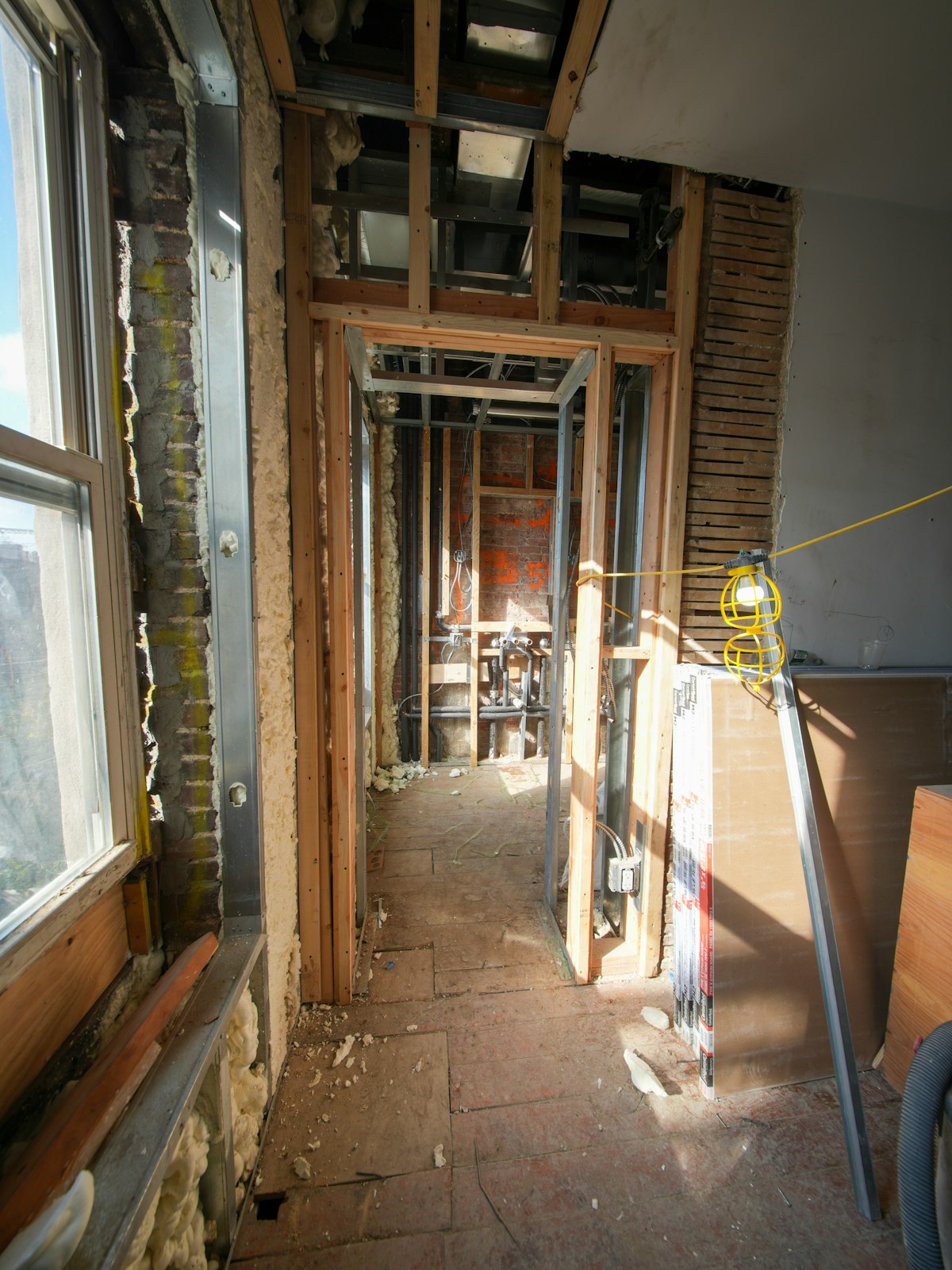
A renovation can change what your home is, what it holds, and who is working inside it, all before your policy knows anything happened. If a loss lands in the gap between the project you started and the project your carrier was told about, the conversation after the claim gets harder than the one before the demolition would have been.
The material-change clause, and the 10% threshold
Your policy was written and priced for the house as described at renewal. Most policies expect you to tell your carrier when that description changes in a meaningful way. Few spell out what "meaningful" means, so brokers use rules of thumb. The most common: a project that costs more than about 10% of your insured dwelling value, runs longer than a year, or forces you to move out. Moving out, disabling your alarm, or opening exterior walls each deserve a call on their own.
Here's what most people don't know: the risk of staying quiet is not only a denied claim. Dwelling limits set before a major addition can reflect only the pre-renovation house, so a covered loss may be paid against a number that no longer matches what you built. Telling your broker early fixes both problems at once.
A practical test: if your answer to any of these is yes, call your broker before you sign the contract. Will the house be empty for stretches? Will walls, roofs or floors be open to weather? Will anyone other than your own contractor have keys? Will you move belongings out? Each one changes the risk the carrier priced.
Four exposures a high-value policy wasn't priced for
Standard high-value policies handle a lived-in home very well. Construction changes four things.
- Vacancy. Policies based on the standard homeowners form typically exclude vandalism after 60 consecutive days of vacancy, and some carriers apply shorter windows or reduce payment on other losses. Most forms treat a dwelling under renovation as not vacant, but courts look for substantial, continuous work, not occasional visits. A house sitting empty between trades can fall on the wrong side.
- Theft of materials. Uninstalled cabinetry, fixtures and appliances are often not covered until they are part of the building. Ask about a materials endorsement.
- Contractor water losses. An open supply line or a roof left uncovered overnight is the classic renovation claim.
- Liability for subcontractors. Injuries on your property become your problem if the contractor's coverage is thin.
Fall projects add a timing problem. A kitchen or addition that opens the envelope in October is exposed to the first hard freeze by December, and a frozen line in a half-finished house is a contractor-versus-homeowner-versus-carrier question nobody wants to answer after the fact. Build the weather schedule into the insurance conversation.
Renovation endorsement or standalone builder's risk
Preferred-tier carriers that specialize in high-value homes generally offer two routes. The first is an endorsement or course-of-construction extension on your existing policy. It fits projects where the house stays occupied, the scope is a remodel, and the contractor carries its own coverage. The second is a standalone builder's risk policy, which fits gut renovations, additions, projects where you will move out, or work large enough that the carrier prefers to underwrite it separately.
Ask your broker three questions: does the project need builder's risk, is there a construction-period deductible (some are many times your standard deductible), and does my existing coverage for stored belongings continue if I move contents off-site? Get the answers in writing before work begins, because coverage set up after the first wall comes down is harder to place.
The contractor's certificate of insurance
A certificate of insurance, or COI, is a one-page proof that your contractor carries coverage. Your broker will want it before demolition, and so should you. Require workers' compensation and general liability, and for high-value homes make sure the liability limits are meaningful against the value of the house, not a minimum that satisfies a licensing office. Ask to be named as an additional insured so the contractor's policy responds to you directly.
Collect the same certificate from every subcontractor who will work on site. The general contractor's certificate does not automatically cover the electrician and the roofer, and a lapse in any one of them is a gap you carry. Request fresh certificates when policies renew mid-project.
Mid-project: shutoffs, alarms and site rules
This is where protective devices pay for themselves. A monitored alarm should stay armed and reporting during the project, with temporary codes issued for crews and reviewed weekly. Automatic water shutoff and leak sensors should stay active in every area where lines are exposed, and your contractor should know where the main shutoff is and when it will be closed overnight. Carriers regularly ask for these site rules on larger projects, and devices that are documented and working are the discounts most directly within your control.
Rafter's assessment records which devices are installed, where, and whether they are active, so you can show your broker and carrier the actual protection in place rather than describing it from memory.
Write down who is responsible for what during the project: who closes the main shutoff at the end of each day, who arms the alarm, who calls you if a line is cut. Put it in the contract or a one-page site-rules sheet. Carriers do not require a specific format, but a documented rule is much easier to rely on than a verbal one.
After completion: update the replacement cost
Finishing the project does not finish the insurance work. New square footage, upgraded finishes and rebuilt systems raise what it would cost to rebuild. Ask your broker for a replacement-cost update and, for larger projects, an appraisal that reflects the finished home. Provide the final scope, invoices and permits. Ask for the inflation guard and extended replacement cost options to be confirmed, since neither replaces an accurate dwelling limit.
A baseline record before the first wall comes down
The strongest position in any renovation dispute is a dated record of the house as it was. Photograph and document the roof, mechanical systems, finishes, existing water and electrical lines, and installed protective devices before work starts. Keep the contractor's certificates, permits, scope and schedule in the same place, then add the finished-state record at completion.
That is what a Rafter home risk assessment builds: a dated condition record of the home before the project, a prioritized mitigation plan for the exposures the project creates, and the documentation your broker needs for the carrier file and the replacement-cost update afterward. Before your contractor's start date, schedule an assessment at rafterhome.com, then send your broker the scope, the schedule and the certificates in one email.