Your Policy Pays to Rebuild Your House. It May Not Pay to Rebuild It to Today's Code.
Here is something that sounds like it shouldn't be true. You can have a house fire, a fully paid homeowners policy, and enough dwelling coverage to rebuild, and still owe tens of thousands of dollars out of pocket to finish the job. The gap has a dull name, ordinance or law coverage, and most homeowners have never looked at their limit.
What it covers
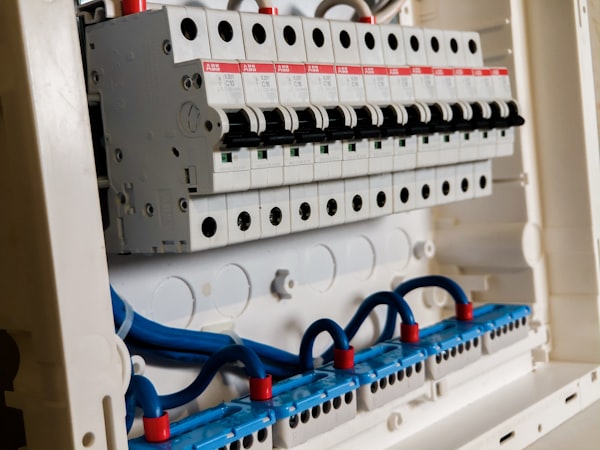
When a house is badly damaged, the town generally won't let you rebuild it the way it was. It makes you rebuild to current code. That can mean new wiring and a larger electrical panel, hardwired smoke and carbon monoxide detectors, more insulation under newer energy codes, larger egress windows in finished basements, stronger roof-to-wall connections in wind country, and in some places a residential fire sprinkler system. If the damage passes a local threshold, the building department can also require you to tear down the parts that survived and start over.
Your dwelling coverage pays to restore what you had. Ordinance or law coverage pays the difference: the cost of the code upgrades, the cost of demolishing undamaged sections, and the value of the undamaged part you were forced to tear down.
The number
On the standard ISO homeowners forms that many carriers use, including the common HO-3, ordinance or law coverage defaults to 10 percent of your dwelling limit. On a home insured for $500,000, that is $50,000.
That sounds like plenty until you price an older house. A 1960s home rebuilt after a major fire can need a new electrical system, new insulation, egress windows, detection, and structural work, all under a single permit. In coastal areas, wind codes add more. A training example from the Independent Insurance Agents and Brokers of America models a code compliance bill of about $130,000 against a $35,000 limit. The authors flag it as illustrative rather than typical, but the direction is right. The older the house and the more the local code has changed since it was built, the faster 10 percent runs out.
Flood works differently and is worth knowing separately. Under federal floodplain rules, if repair costs in a high-risk flood zone reach 50 percent of the structure's market value, the home has to be brought into compliance with floodplain requirements, which can mean elevating it. Flood policies through the National Flood Insurance Program include a separate Increased Cost of Compliance benefit of up to $30,000 for that situation.
Who should care most
Anyone whose house is more than 30 years old. Anyone who has done unpermitted work, or who bought a house where the previous owner did, since that work may have to be redone to code after a loss. Anyone in a town that has adopted a newer building or energy code in the last few years. And anyone in a coastal or wildfire area, where codes have tightened the most.
The move
Pull your declarations page and find the ordinance or law line. It may appear as its own coverage or as a percentage of Coverage A. If it says 10 percent, ask your agent what it costs to raise it to 25 or 50 percent. Many insurers offer those options, and on a $500,000 dwelling they mean $125,000 or $250,000 of code coverage instead of $50,000. While you have the agent on the phone, ask whether the coverage applies to undamaged portions of the house, and whether it sits on top of your dwelling limit or comes out of it, because policy forms differ.
Then do one more thing that helps on any claim: keep a record of the permits and upgrades already done on the house. A panel replaced in 2019 under permit is one less thing a building official will make you redo, and one less argument with an adjuster. Rafter keeps that record in each member's home file for exactly this reason.