The Tree Over Your Roof: Who Pays, and What "Should Have Known" Means
A neighbor's tree on your roof is usually your claim, not theirs. The exception is negligence, and it turns on a paper trail you can build this fall.
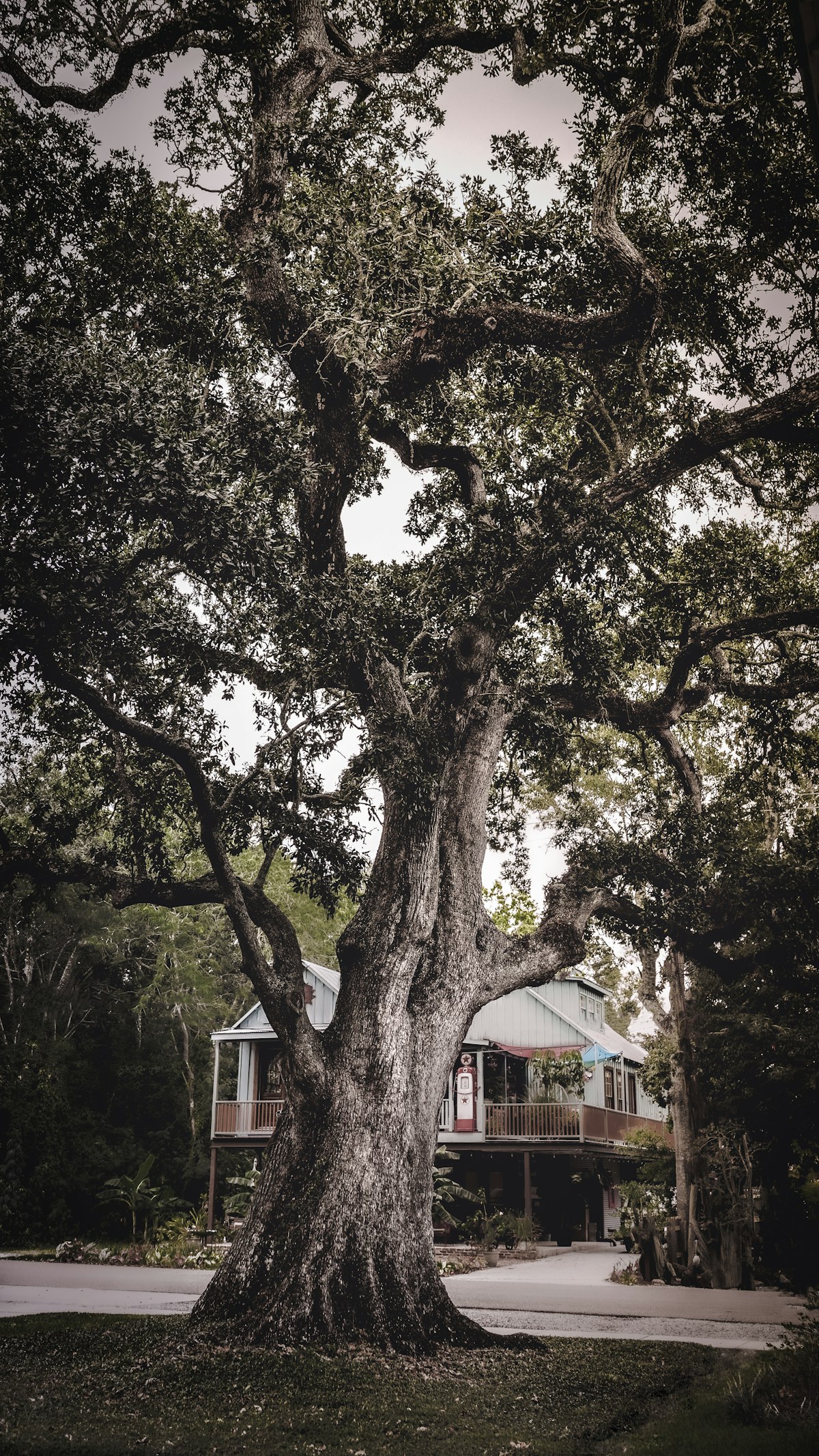
A tree comes down in an October windstorm and lands on your roof. Before anyone has climbed up to look at the damage, the first question everyone asks is the same one: whose tree was it? It feels like the answer should decide who pays. In most cases, it doesn't.
The default rule in U.S. property insurance is simple and counterintuitive: the policy on the damaged property responds, regardless of where the tree was rooted. Your roof, your policy, your deductible, even if the tree stood entirely in your neighbor's yard. The exception is negligence, and negligence is decided by a single question: did the tree's owner know, or should they have known, that the tree was a hazard? That question is answered almost entirely by documentation, which means the file you build this fall matters more than the argument you'd have in the driveway afterward.
The default rule: the damaged property's policy responds
Insurers sometimes call this the "where it lands" principle. A tree that falls is treated like any other windstorm, lightning, or weight-of-ice event: an accident, with no one at fault, paid by whichever policy covers the thing that got hit. If your neighbor's maple crushes your garage, you file with your own insurer under your dwelling or other-structures coverage, and you pay your own deductible. If your oak takes out their fence, they file with theirs.
This feels backwards to new homeowners. It isn't. A healthy tree can come down in a strong enough wind, and no reasonable owner could have prevented it. Making the owner pay for every fall would put every homeowner with a mature tree one gust away from a liability claim. Treating the fall as an accident keeps the peace and keeps the claim moving.
Your insurer may, on its own, try to recover its payout from your neighbor's carrier if it believes the neighbor was at fault. That process is called subrogation, and if it succeeds you may get your deductible back. It's your insurer's call, not yours to litigate, and it's uncommon unless the negligence is obvious and well documented.
Coverage details people miss: removal limits, fences, driveways, no-damage falls
Here is what most people don't know until they file: the policy pays generously for the structure and stingily for the tree itself. A standard policy covers the repair to your roof, siding, garage, or deck up to your limits. Debris removal, meaning getting the tree off your house and out of your yard, is typically capped at around $500 to $1,000 per loss, with many policies limiting it to $500 per tree. Removing a large hardwood from a roof can cost several times that, and the difference is yours.
Four situations catch homeowners off guard:
- The tree fell but hit nothing. If a tree comes down in your yard and damages no covered structure, most policies pay nothing toward removal. There is technically no loss to claim. Many policies make one exception: if the fallen tree blocks your driveway or a ramp for a disabled resident, removal is usually covered up to the debris limit.
- Fences, sheds, and detached garages. These are "other structures," usually covered at 10 percent of your dwelling limit. That's plenty for a fence, but a large detached garage or workshop can exceed it.
- Your own landscaping. If the falling tree destroys your shrubs or a second tree, standard policies pay for plants only when the cause is a named peril like wind or lightning, typically capped at 5 percent of your dwelling limit total and around $500 per tree or shrub. That will not replace a mature tree.
- The car in the driveway. Damage to a vehicle is an auto claim under your comprehensive coverage, not a homeowners claim. If you carry liability-only auto coverage, the car is not covered.
The practical takeaway: read the debris removal line on your declarations page before wind season. Some carriers offer an endorsement that raises it, and it's inexpensive.
The negligence exception, and the evidence it actually requires
The default rule flips when the tree's owner was negligent. The legal standard, with modest variation by state, is that the owner knew or should have known the tree posed an unreasonable risk and failed to act. A healthy tree that falls in a hurricane is not negligence. A tree that was visibly dead, split, leaning further each year, hollowed by rot, or shedding large limbs, that a neighbor had complained about in writing, and that the owner left standing anyway, may be.
"Should have known" is the phrase that does the work. It does not require that anyone proved the tree was dangerous. It asks whether a reasonable owner, paying ordinary attention, would have noticed. Adjusters and, if it gets that far, courts look at a short list of things: the condition of the tree before the fall, whether the warning signs were visible from the ground, whether the owner had received complaints or a professional recommendation, and what the owner did after learning of the problem.
Every item on that list is a matter of record, not memory. A dated photo of a dead crown from last summer. An email to the neighbor. An arborist's written assessment. Without those, the claim is one homeowner's recollection against another's, and the default rule wins. With them, it becomes a liability claim against the owner's policy. Note what that means if you own the tree: a negligence finding is not a coverage bar. Your liability coverage responds, up to its limit, and pays for your defense. It's a shift in which policy pays, not a denial.
If it's your neighbor's tree: how to raise it once, in writing, and stay on good terms
Most tree disputes never become claims, and the ones that do usually started with a conversation that went badly. The goal is to create a record without creating a feud.
Start in person. Mention what you've noticed, specifically: the dead limb over your driveway, the lean that's gotten worse, the fungus at the base. Offer to split the cost of an arborist visit. Many neighbors will simply handle it, and the relationship is worth more than being right.
Then follow up once in writing. A short, friendly email or text gives your neighbor the information they need to act and establishes the date they had it. Something like: "Great talking yesterday. Just so we both have it in writing, the large limb on the oak nearest our shared fence looks dead and is directly over our roof. Happy to share the cost of having someone look at it." Attach a photo. Keep a copy. Do not threaten, cite law, or copy a lawyer. The purpose is a dated, neutral record, not leverage.
Two things you can do without asking anyone. In most states you may trim branches that cross onto your property back to the line, at your expense, so long as you don't harm the tree. And you can photograph the tree yourself each season from the same spot, dated, showing the crown and the base. It costs nothing and answers the "should have known" question either way.
If it's your tree: the arborist visit and the file that protects you
If you own the tree, the calculus is the reverse and the fix is cheaper. The best protection against a negligence claim is evidence that you paid reasonable attention: a professional looked at the tree, told you what they saw, and you acted on it.
The professional to call is an ISA Certified Arborist, ideally one who holds the Tree Risk Assessment Qualification (TRAQ). Ask for a Level 2 basic assessment, which is a full ground-level inspection of roots, trunk, and canopy and is the standard of care for residential trees. You want a written report, not a quote for removal. A legitimate assessment tells you the tree's condition, the specific defects if any, the likelihood of failure, what it would hit, and a recommendation: monitor, prune, cable, or remove. Costs vary by region and number of trees; expect a fee in the low hundreds for a single-tree written assessment, and be skeptical of anyone offering it free in exchange for the removal job.
Then do what the report says, and keep everything: the assessment, the invoice for the pruning or removal, before-and-after photos, the date. If a tree the arborist cleared later fails in a storm, that file ends the negligence question. If the arborist flagged a problem and you fixed it, the same. The only way to lose is to have been told and done nothing.
A pre-wind-season pass on every tree within falling distance of the house
Fall is the right time for this: leaves are still on, so a dead crown is obvious, and the arborists aren't yet buried in storm calls. Walk the property once with a phone and look at every tree tall enough to reach a structure if it fell, on your side of the line and your neighbor's.
Look for the signs an adjuster would later ask about: dead or leafless sections of crown while the rest is green; large limbs that are cracked, hanging, or already dead; mushrooms or conks at the base or on the trunk, which indicate internal decay; a trunk cavity, a vertical crack, or bark peeling in sheets; a lean that has visibly changed, especially with soil heaving or exposed roots on the opposite side; and recent construction or trenching within the root zone. Photograph each tree from the same two or three spots so the next pass is comparable. Note which trees are yours and which are your neighbor's.
Anything on that list gets an arborist. Anything on your neighbor's side gets the conversation above. Everything gets a dated entry somewhere you'll be able to find it after the storm, which is not a folder on the laptop that was sitting under the skylight.
This is the kind of record Rafter is built to hold. A Rafter home risk assessment maps the trees and other exterior hazards within striking distance of your structures, and the home profile keeps the dated photos, the arborist's report, the pruning invoice, and the note about the email you sent next door, all in one place and off-site. When your carrier asks what you knew and when, or when you need to show a neighbor's adjuster what they should have known, the answer is a lookup rather than a search of old texts. The same profile feeds your mitigation plan, so the dead limb over the garage shows up as a dated task with a cost estimate rather than a vague worry, and the debris-removal limit on your declarations page gets flagged before you find out the hard way. Start with the walk this weekend. Then let Rafter keep the file.