Insurance-to-Value on a High-Value Home: Why Your Rebuild Estimate Drifts
Your policy limit stops tracking rebuild cost the day you set it. Learn how extended and guaranteed replacement differ and what to review.
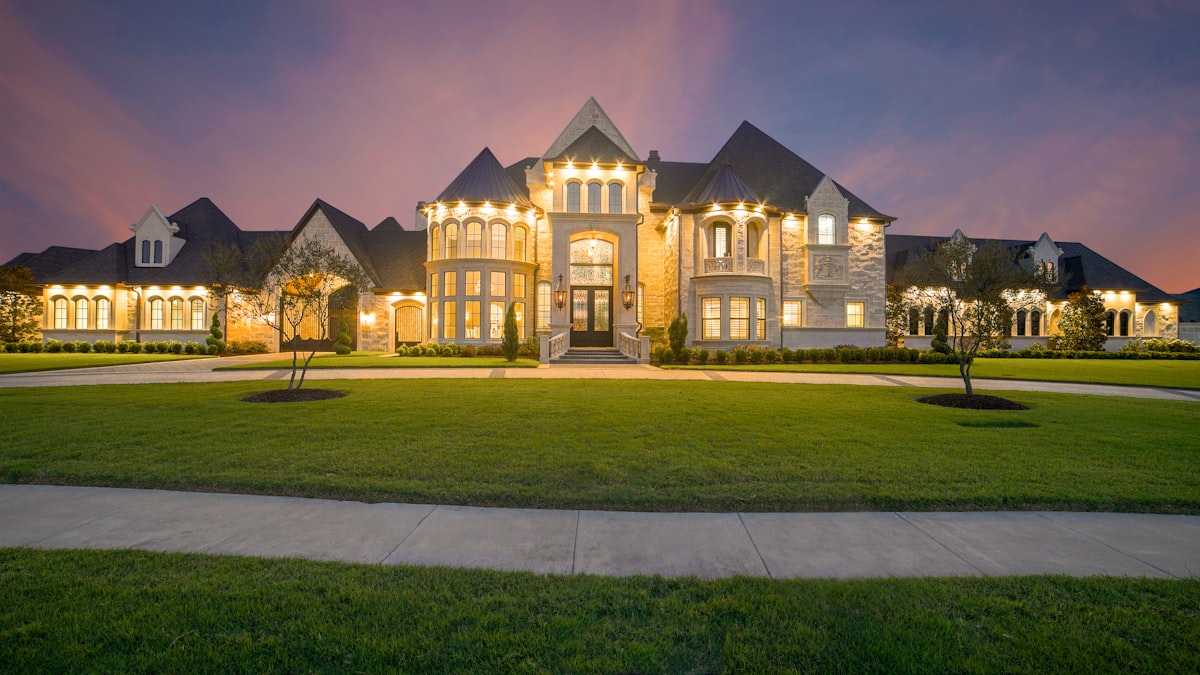
Your policy limit was right on the day you set it. Every renovation, every custom finish, and every year of construction inflation since then has moved the real cost of rebuilding your home, and your limit does not move on its own. In a total loss, the gap between the two comes out of your pocket.
Why market value and rebuild cost diverge
Market value includes land, location, and what buyers will pay in a given quarter. Rebuild cost includes none of that. It is the price of labor, materials, permits, and debris removal to put your house back, today, with today's code requirements.
The two numbers can move in opposite directions. A softer market can lower what your house would sell for while skilled-trade labor and materials push rebuild cost higher. Custom millwork, hand-set stone, imported tile, and slate roofs also cost far more to replicate than they add to a comparable sale price.
The national picture shows how common this gap is. A Harvard Business School working paper on mortgage and policy records found the average homeowner with a mortgage insures roughly 70% of rebuild cost. NerdWallet's analysis of First Street data puts the median U.S. rebuild cost near $280 per square foot, with higher-cost states such as New Jersey around $330. A high-value home in lower Fairfield or Westchester County will usually sit well above those medians.
What changed since your last valuation
Here is what most people don't know: your dwelling limit is usually set at purchase or at the last formal valuation, and it does not adjust automatically unless your policy includes an inflation adjustment. Even then, the adjustment is a flat annual percentage, not a measure of what your specific home would cost to rebuild.
Walk back through the last five years. Did you finish a basement, add a wing, upgrade a kitchen, or replace mechanical systems with higher-end equipment? Did you add a pool house, a generator, or a wine room? Each one raises rebuild cost. If your advisor never heard about it, your valuation never reflected it.
The cost of being wrong can be large. In a study of roughly 5,000 claims after the 2021 Marshall Fire in Colorado, researchers found 74% of homeowners were underinsured, by an average of about $139,000. That fire hit mostly middle-market homes. The same math on a larger, more customized home produces a larger gap.
Extended replacement cost and guaranteed replacement: how they differ
These two terms sound alike. They protect you differently.
Extended replacement cost pays a set percentage above your dwelling limit if rebuilding costs more. NerdWallet describes the typical range as 10% to 50%. On a $2 million limit with a 25% extension, your maximum is $2.5 million. If the rebuild costs $2.8 million, you cover the $300,000 difference.
Guaranteed replacement cost pays to rebuild your home with no fixed cap, though carriers commonly attach conditions. Typical conditions include insuring to 100% of an estimated rebuild cost and reporting major improvements promptly. Read your policy for the exact terms.
Availability varies. Preferred-tier and private carriers more often offer guaranteed replacement on high-value homes, while many standard carriers do not. After the Marshall Fire, Colorado's Division of Insurance found only 8% of affected homeowners had guaranteed replacement coverage.
Renovations and systems that belong in the file
A rebuild estimate is only as accurate as the description behind it. High-value carriers price what they are shown, and most want the same details. Gather these:
- Finishes: flooring, cabinetry, countertops, millwork, and window and door specifications, with brands and materials.
- Structure and envelope: square footage by level, roof material and age, foundation type, and any additions with permit dates.
- Systems: HVAC, electrical service and panel, plumbing, generator, and any water-leak or fire-protection devices.
- Renovation records: contractor invoices, permits, and dated before-and-after photos.
Protective devices matter here for a second reason. Automatic water shutoff valves, monitored leak sensors, and monitored security and fire systems often qualify for premium credits, but only when you can document them. A device you installed three years ago and never reported earns you nothing.
What to bring to your next advisor review
Do not wait for your renewal notice. Ask your advisor for a fresh replacement cost estimate from the carrier's own valuation tool or an independent appraiser, and bring the following:
- Your current dwelling limit, extended or guaranteed replacement terms, and any inflation adjustment on the policy.
- A list of every improvement since the last valuation, with dates and costs.
- Documentation of protective devices and security systems.
- Your questions: Is my limit within the carrier's range of my rebuild estimate? What conditions apply to my replacement cost coverage? Which credits am I missing?
Treat the estimate as a range, not a single figure. Ask your advisor what assumptions sit behind it, including finish level, code upgrade costs, and demolition and debris removal.
A review cadence that fits a multi-property portfolio
If you own more than one property, a single annual conversation will not cover them. Set a rhythm that matches how each home changes.
Review every property's limit at each renewal. Request a full valuation every three years, and sooner after any renovation over a threshold you pick, such as $100,000. Keep one record per property, because a lake house with a boathouse and a primary residence with a new wing change on different timelines.
Assign one person, whether you, a family office contact, or a property manager, to send updates to your advisor within 30 days of any project finishing. That habit prevents a stale valuation more effectively than any policy feature.
Put the record in one place
Most homeowners with high-value properties hold this information in six places: a contractor's email, an architect's drawing set, a closing binder, a photo library, an advisor's file, and memory. When it is time to review a limit, or file a claim, nobody can assemble it quickly.
A Rafter assessment brings it together. Our AI-powered home risk assessment records your finishes, systems, renovations, and protective devices in one dated record, then produces a prioritized mitigation plan so you know which updates reduce risk and which documents unlock credits. Your advisor gets a consistent set of facts to review your limit, and your carrier gets the information it needs to price your home accurately. Better-documented homes make better outcomes for everyone involved.
Your next step: before your next renewal, start a Rafter assessment at rafterhome.com for your highest-value property, then send the record to your advisor and ask for an updated replacement cost estimate.