A Record Share of Homeowners Got a Premium Decrease This Year. Here's What Separated Them.
11.7% of renewing homeowners saw a premium decrease in 2026. Here's what carriers price, and the four levers you control before renewal.

In the first half of 2026, 11.7% of homeowners who renewed saw their premium go down, according to a large home insurance marketplace's 2026 report. That is the highest share it has recorded, up from 7.4% in 2025 and 4.9% in 2024. If your renewal notice arrived higher again, the question worth answering is what the 11.7% had that you can still build.
The number behind the headline: a selection, not a trend
The same report puts the average renewal increase at 10.6%, down from 19.4% in 2025 and 28% in 2024. New-policy premiums rose just 5.9%, and shoppers now pull 27% more quotes than they did a year ago (74% more than at the 2024 low). Carriers are competing for business again.
That matters because a decrease is not handed out evenly. When carriers have room to compete, they choose which homes to compete for. A home with a verifiable, low-risk profile gets priced better. A home with an unknown profile gets priced at the average, which is often the renewal increase you just opened.
Here's what most people don't know: the report draws on one marketplace's own quoted and insured properties, not the whole industry. Treat 11.7% as a strong signal of direction, not a national census. The underwriting logic behind it is standard, and that part you can act on.
Where decreases landed, and where they didn't
Geography still drives most of the outcome. The marketplace reports average premiums nearly flat or falling in New York, Wisconsin, Missouri, Oregon and Colorado. Six states, including California, Florida and New Jersey, still saw double-digit increases. Other datasets show steep increases in parts of the Upper Midwest, so your state's story may differ from the national one.
One practical test: compare your increase to your state's range, not the national average. A 9% increase in a state where the average is 25% suggests your file already helps you. A 9% increase in a state where the average is flat suggests a carrier-specific reason, and that is exactly when a requote earns its keep.
You cannot move your house, but you can read this correctly. In a flat or falling state, your odds of a decrease depend on your file. In a high-increase state, a better file shrinks the increase and widens your carrier options, because carriers that are tightening on average homes often stay open to well-documented ones.
What a carrier is pricing when it offers a decrease
Four things carry the most weight. Claims history comes first: years without a loss, and the type of past losses, since water claims weigh heavily. Roof age comes second. The same report found the premium gap between homes with 1–5 year roofs and 11–15 year roofs hit $189 a year in the first half of 2026, up from $65 in 2021.
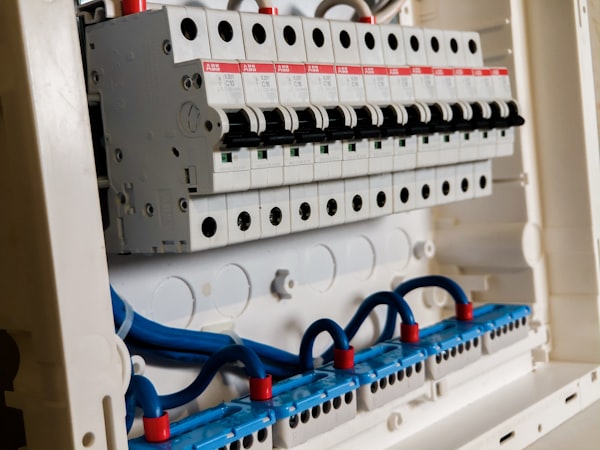
Third is the age and condition of the systems that cause most losses: plumbing, water heater, electrical panel, HVAC. Fourth is what the carrier can verify. A checked box on a questionnaire is a claim. A dated photo, an invoice or a certificate is evidence, and evidence is what lets an underwriter price you below average.
Consider two homes with the same square footage and the same 12-year-old roof. One owner can show a dated assessment, a roof condition report and a monitored alarm certificate. The other can say "it's fine, I think." The underwriter does not need to be skeptical of the second owner to price the second home higher. Missing information is a cost, and carriers pass it along.
None of this is adversarial. Carriers are pricing uncertainty. The less uncertainty your file carries, the less they need to charge to cover it.
The requote conversation: what to hand your agent before they shop
More quotes only help if each quote is built on accurate, favorable facts. Before your agent shops your policy, put these in one folder: the roof's install date and material, receipts for any plumbing, electrical or HVAC replacement in the last 15 years, the make and install date of your water heater, and proof of any protective devices.
Add the details people forget: the permit number for a panel upgrade, the monitoring certificate for your alarm, the invoice for a water shutoff valve. Each one removes a guess from an underwriter's worksheet. When agents requote with this in hand, they can ask carriers for credits by name rather than hoping the system finds them.
Expect your agent to ask for permission to share this file with several carriers. Say yes. It also keeps your story consistent across quotes, which matters because mismatched answers between a quote and a later inspection are a common reason a new policy gets re-rated or questioned after binding.
Ask one more question: which carriers in your state are actively growing in your home's profile. Appetite changes quarterly, and your agent sees it before you do.
The four levers you control before renewal
Protective devices. A water shutoff valve or leak-detection system and a centrally monitored fire and burglar alarm are the discounts a homeowner most directly controls. Many carriers credit them, but only when the certificate is on file. Installing a device and never filing proof is the most common way people leave this money behind.
Deductible. Raising it from $1,000 to $2,500 or a percentage deductible can lower the premium. Do this only if you can cover it from savings tomorrow.
Documented repairs. A repaired roof flashing or replaced supply line only helps if the invoice and dated photos exist.
The claim you didn't file. Small claims stay on your record for years even when they are paid out modestly. Before you file a loss near your deductible, get a repair quote and ask your agent how it would affect your next renewal.
One caution on timing: do not wait for the renewal notice to act. Most carriers set renewal pricing weeks before the notice goes out, and a device certificate that arrives after pricing is set often waits a full year to count. Work backward from your renewal date and aim to have each document filed 60 to 90 days early.
Why a decrease this year doesn't guarantee one next year
Carrier appetite swings, reinsurance costs move, and weather losses in your region change filed rates. A decrease is a snapshot of how a carrier viewed your home against its portfolio that year.
What persists is the file. Roofs age by a year every year, water heaters pass the 10-year mark, and a protective device installed this fall can fail quietly if nobody checks it. A home that was well-documented at renewal but not maintained will lose its edge. Staying in the group takes an annual refresh, not a one-time cleanup.
A simple calendar works: reassess each fall, log repairs the week they happen, test devices every quarter, and send your agent a one-page update 60 days before renewal. It takes an hour or two a year, and it turns your policy from something that happens to you into something you manage.
Building the record once so every renewal starts from evidence
This is where Rafter fits. A Rafter assessment goes through your roof, plumbing, water heater, electrical panel, HVAC and protective devices, and records their condition and age with dated photos. You get a prioritized mitigation plan that ranks what to fix first, and Rafter helps you document the maintenance you complete so the proof lands in one place instead of a junk drawer.
For discounts, Rafter helps you identify which protective devices your carrier may credit and assemble the documentation to claim them, whether that is a water shutoff valve, leak sensors or a monitored alarm. When your agent requotes, you hand over a verified condition record rather than answering a questionnaire from memory.
Your next step: before your renewal notice lands, start a Rafter assessment at rafterhome.com, finish the top item on your mitigation plan, and send the resulting record to your agent 60 days ahead of renewal. That is the sequence that puts you in position for the next decrease instead of reading about it.