Your Policy Says "Reasonable Care to Maintain Heat." Courts Have Been Deciding What That Means.
Frozen-pipe claims turn on "reasonable care." Three 2026 rulings show what courts look for, and the records that answer it.
A frozen pipe is one of the few water losses where your policy covers the damage only if you can show what you did before it happened. The average frozen-pipe claim ran about $30,000 in one national carrier's 2024 through mid-2025 data, across more than 20,000 claims. Whether you get paid often comes down to two words in your policy: reasonable care.
Courts are deciding what those words mean right now, and the answers turn on records most homeowners never keep. This is how the clause works, what three 2026 decisions show, and what proof you can build before the first hard freeze.
The freeze clause in your policy: covered, with two conditions
Most standard homeowners policies cover a burst pipe from freezing. The exclusion is narrower than people think. In the common form, freezing of a plumbing, heating or sprinkler system is not covered unless you used reasonable care to maintain heat in the building, or you shut off the water supply and drained the system.
That gives you two ways to qualify. Keep the heat on, or winterize the house fully. Miss both and the carrier can deny the claim.
The clause is fair. A carrier can't price in a house left with no heat in January. The gap is information: "reasonable care" is judged after the pipe bursts, by an adjuster working from whatever evidence exists. You carry the burden of showing you met the condition, and most homeowners have nothing but their own memory.
Where 55°F comes from, and why it may not be in your policy
Here's what most people don't know: the number adjusters quote is usually a convention, not policy text. Many policies say only "reasonable care" and never name a temperature. Some policies and endorsements do state a minimum, and in at least one 2026 federal case the policy language itself pointed to 55°F.
Read your own policy for the actual wording. If it names a number, that number is your floor. If it doesn't, 55°F is still the safest working target, because it is the figure adjusters and courts reach for. Water lines in exterior walls, crawl spaces and unheated garages can freeze even when the thermostat in the hallway reads 55°F, so the setting is a starting point, not a guarantee.
Three 2026 decisions: the traveling owner, the absent tenants, the vacant house
Three recent rulings show how this plays out. They are summaries from public reports, not legal advice, and the facts of your loss will differ.
The owner who left for the winter. A federal court in western Louisiana (May 2026) heard a case where the policy excluded freeze losses unless the owner kept the home at 55°F or higher. The owner said he set the thermostat to roughly 60 to 65°F before leaving, and a handyman said he checked in once or twice a week. The carrier said the system was off and pointed to a 41°F reading. The court sent the dispute to a trier of fact because the evidence conflicted. The owner survived, but only because there was testimony on both sides. A thermostat log would have settled it in minutes.
The tenants who were away. A federal court in eastern Washington (March 2026) ruled for the carrier after pipes burst in a duplex during a cold snap that reached minus 10°F. The owners had agreed to monitor the property. They had been told months earlier that the furnace filter was clogged, and the same problem was present at the time of loss. One owner saw the thermostat stuck at 40°F despite a higher setting and didn't investigate. Utility records showed minimal gas use. The court found reasonable care wasn't met.
The house with a winterization story and no paperwork. An Ohio appeals court (2026) affirmed a verdict for the carrier at a vacant property. The owner's supervisor said he had winterized the house. The carrier's inspector asked for gas bills and winterization records and, per the testimony, never received them. The case turned on proof of the cause of loss, but the missing records shaped the dispute from the first day.
The pattern across all three: the homeowner's account was plausible, and the paper was missing.
"Unoccupied" is not "vacant": the long-trip problem
Many policies also restrict coverage for vacant homes. The restriction is often triggered after 30 or 60 consecutive days, depending on the policy. A furnished home where you live part-time and travel for six weeks is generally "unoccupied," not "vacant," but the line varies by carrier and by how the policy defines the term.
If you spend winters away, a second home sits empty for weeks, or an adult child is living in an otherwise empty house, call your agent before you leave and ask three questions. How does my policy define vacant and unoccupied? Does it name a minimum temperature? Does it require periodic inspections while I'm gone? Write down the answers and the date.
What an adjuster asks after a burst pipe
Expect a short list, usually in the first week:
- What was the thermostat set to, and since when?
- Was anyone in the house, and who checked on it?
- Was the heating system working? When was it last serviced?
- Did you shut off the water or drain the lines?
- Can you provide utility bills for the months before the loss?
Each question has a document that answers it: a thermostat history, a service invoice, a dated checklist, a gas or electric bill. Without them, you are offering testimony against an adjuster who is offering a stained pipe and a cold-house reading.
Thermostat logs, temperature sensors and shutoffs: the record that answers the question
Three tools build the proof, and two of them can also lower your premium.
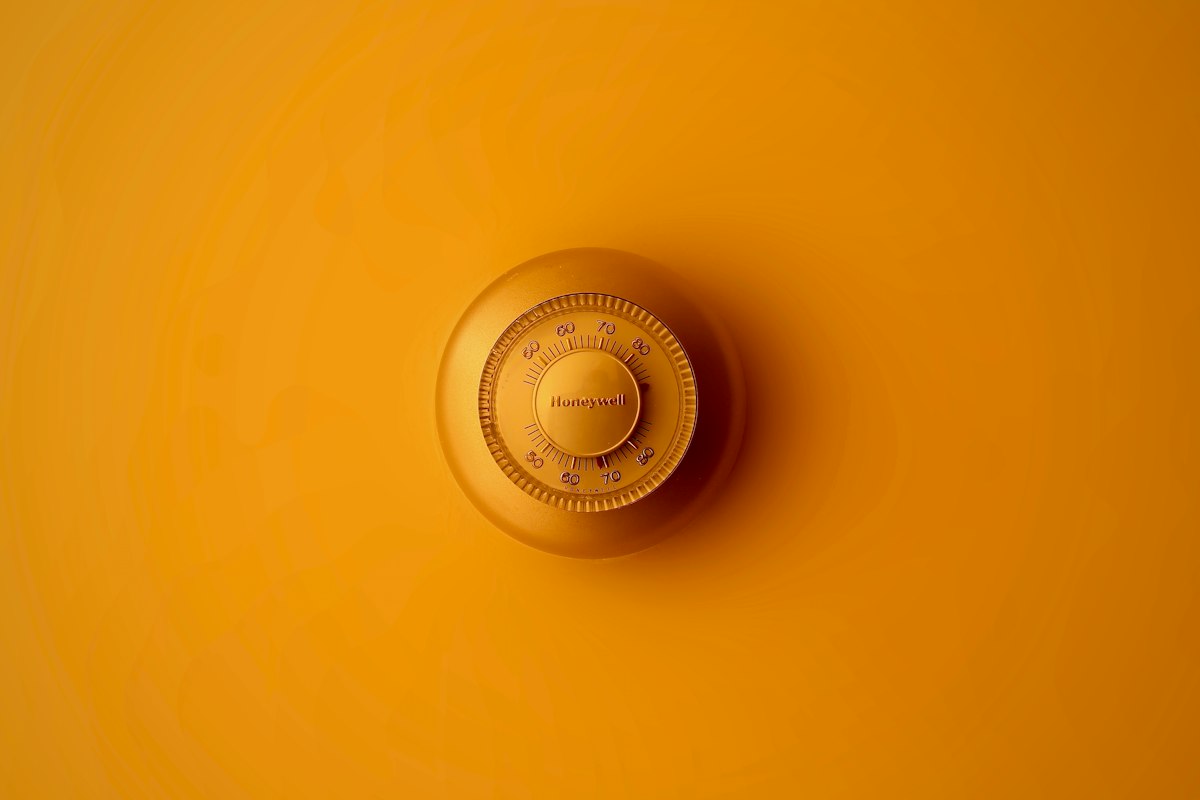
A connected thermostat. Most smart thermostats keep a history of set points and indoor temperatures. Screenshot it before you leave and after you return. That one file answers the "was the heat on" question.
A temperature sensor in the coldest spot. The hallway reading doesn't protect the pipe in the crawl space. A low-temperature sensor placed there alerts your phone before the pipe freezes and records the temperature either way.
An automatic water shutoff. A shutoff valve tied to leak sensors stops the flow when a pipe fails, which cuts the damage and timestamps the event. Many carriers offer a discount for water-leak detection or automatic shutoff devices. The amount varies by carrier and state, and it usually requires proof of installation.
The record matters as much as the device. A sensor nobody can prove was installed, or a shutoff nobody can show is working, earns no credit and answers no adjuster.
Setting up the proof before the first hard freeze
You have a few weeks before the cold arrives in most of the country. Spend them on this checklist:
- Read your policy's freeze language and note any named temperature.
- Have the heating system serviced and keep the invoice.
- Photograph the main shutoff valve and the pipes in exterior walls, crawl spaces and garages.
- Set a heat floor of at least 55°F in every home, including the one you visit twice a year.
- Screenshot your thermostat settings and log before any trip longer than a few days.
- Save your winter utility bills in one folder.
That is a weekend of work, and it replaces "trust me" with dated evidence.
Rafter does this for you. A Rafter assessment uses AI to review your home's condition, including water lines, shutoff valves, heating equipment and protective devices, and turns what it finds into a prioritized mitigation plan. Every photo, service invoice and device installation lands in one dated file, which is the record an adjuster asks for after a loss and the proof your agent needs to apply a protective device discount. Start your Rafter assessment at rafterhome.com this month, then add your thermostat screenshots and heating service invoice to your file before the first freeze warning.