What High-Value Home Insurance Policyholders Should Do Before Their Spring Renewal
High-value home policyholders aren't immune to the 2026 insurance market. Here's what preferred-tier homeowners should document and prepare before their spring renewal conversation.

Spring renewal season doesn't look the same when you're insured at the preferred tier for high-value homes. You're not shopping for the cheapest quote — you're managing a relationship with a carrier that has built its model around exceptional coverage for well-maintained, well-documented homes. But in 2026, even preferred-tier policyholders are finding that relationship requires more active management than it once did.
The private carrier market is tightening. Rates for high-net-worth policyholders are forecast flat to up 5% this year — a narrower band than standard carriers, but not immunity. More importantly, the scrutiny applied at renewal has shifted. Carriers are relying less on stated property conditions and more on what they can verify: aerial imagery, third-party property data, documented maintenance records. Homeowners who arrive at renewal with evidence of how well their property has been maintained are in a categorically different position than those who don't.
Why Even Private Carrier Clients Are Feeling the 2026 Market
Preferred-tier carriers have insulated their members and policyholders from the worst of the homeowners insurance crisis — but they haven't escaped it. The structural forces reshaping the broader market apply at every tier: reinsurance costs remain elevated, catastrophe modeling has grown more conservative, and reconstruction costs for high-value homes have outpaced general inflation significantly.
For high-net-worth policyholders specifically, 77% report struggling to secure adequate property insurance — a number that reflects how constrained the market has become even at the premium end. Carriers are making structural adjustments that directly affect preferred clients: capping certain coverages as a percentage of Coverage A, tightening wind and hail deductibles, and being more selective about properties in catastrophe-exposed ZIP codes, including parts of Westchester and Fairfield County.
The Westchester-Fairfield corridor carries exposures underwriters are watching closely: northeast storm and hurricane risk, aging infrastructure in older estates, and the complexity of properties that have been added to or renovated over decades. None of this disqualifies a property — but it does mean your carrier's team is asking harder questions at renewal than they were three years ago.
What Private Carrier Underwriters Are Actually Looking At This Year
Preferred carriers don't publish their underwriting checklists, but the categories of concern are consistent and well-understood by sophisticated brokers. In 2026, the primary focus areas for high-value home underwriting are:
Roof condition and age. Preferred carriers will flag roofs approaching or beyond 20 years, particularly on materials that don't age well. Unlike standard carriers, private carriers have more flexibility on roof age — but only when there's documentation supporting current condition. A 22-year-old roof with a recent inspection report and completed repairs is a fundamentally different risk than the same roof with no paper trail.
Water systems and plumbing. For homes in the $2M+ range, a single water event can generate a six-figure claim. Underwriters are looking at supply line age, the presence of automatic water shutoff technology, and prior water losses. Homes with documented plumbing maintenance and leak detection systems are measurably lower risk — and carriers are increasingly pricing that in.
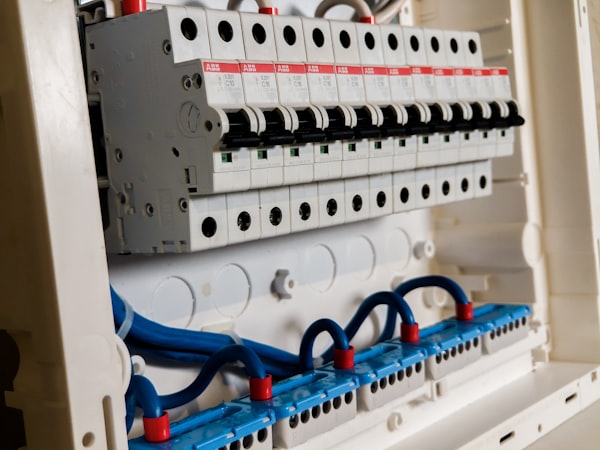
Electrical and mechanical systems. Older estate homes often have electrical systems that have been piecemeal-updated over decades. Knob-and-tube wiring, undersized panels, or mismatched updates from multiple contractors are underwriting concerns that can affect both coverage terms and pricing.
Reconstruction valuation accuracy. High-value homeowners are frequently underinsured — not because they skimped, but because construction costs have moved dramatically. If your home has been significantly updated or expanded, your insured value may lag the actual rebuild cost.
The Three Things That Drive Preferred-Tier Pricing — and How to Protect Them
Preferred carriers price high-value policies on a simple thesis: this home is well-maintained, its risks are documented and manageable, and the policyholder is actively engaged in reducing loss exposure. Everything that supports that thesis gets rewarded with better terms.
Claims history. A clean record is your most valuable renewal asset. Protecting it means investing in prevention: the leak sensor that catches a slow drip before it becomes a $40,000 water claim, the roof repair that gets done before a minor issue escalates into a major one.
Documented property condition. This is the lever most underutilized by even sophisticated homeowners. A property with well-organized records of maintenance, system upgrades, and risk mitigation investments signals something specific to an underwriter: this home is actively managed. Carriers are relying increasingly on verifiable data, and a homeowner who arrives with a comprehensive property record is ahead of that process rather than subject to it.
Protective devices. High-value home carriers offer meaningful discounts for qualifying protective systems — monitored security, fire suppression, water leak detection, and automatic shutoff valves. Discounts typically range from 5% to 20% depending on the carrier and device combination. Here's what most policyholders don't know: the discount usually requires more than installation. It requires documentation — proof of professional installation, system activation, and in some cases ongoing monitoring verification. Homes that have the right devices but haven't filed proper documentation are leaving real money on the table at every renewal.
How to Use Your Property Condition to Negotiate at Renewal
Renewal conversations with preferred carriers aren't purely actuarial — they're relational. The documentation you bring into that conversation shapes what's possible.
The most effective approach is to treat your renewal as a presentation, not a passive event. Come in with a clear picture of your property's current condition: systems updated, maintenance performed, protective investments made. If your carrier is working from aerial imagery and third-party data, you want to be the primary source of accurate, favorable information — not a passive subject of their data pull.
Roof: If your roof is aging but in good condition, an independent inspection report completed within the last 12 months — noting remaining useful life and completed repairs — is evidence your carrier cannot easily dismiss. It shifts the conversation from "how old is it" to "here's what it actually looks like today."
Water risk: Documentation of installed leak detection systems, automatic shutoff valves, and annual plumbing inspections directly addresses one of the highest-frequency claim categories for high-value homes. This isn't just documentation — it's an argument for preferred pricing.
System updates: Any significant update to electrical, HVAC, plumbing, or roofing in the prior two to three years should be documented with permits, contractor records, and completion photos. This removes the uncertainty underwriters price for when they can't confirm current condition.
Documentation Standards That Private Carriers Expect
The documentation baseline that sophisticated preferred-tier policyholders maintain includes a complete and current home inventory, a property condition record covering all major systems, records of all maintenance and repair work with invoices and permits, proof of installation and activation for protective devices, updated reconstruction cost estimates after renovations, and prior inspection reports with corrective actions taken.
This isn't bureaucratic — it's the record your carrier is trying to build on their own when they conduct a property review. Having it organized and current means you're controlling the narrative rather than being evaluated by someone who doesn't know your home.
When to Involve Your Broker — and What to Bring to That Conversation
Engage your broker 60 to 90 days before renewal — not at the 30-day mark when options are limited. Bring a current picture of your property: recent maintenance completed, protective systems installed, any significant changes since the last renewal. Flag areas of concern proactively. If your roof is aging, say so — and bring the inspection report. Surprises at renewal are expensive. Proactive disclosure almost always produces better outcomes than reactive negotiation.
One specific conversation worth having: whether your installed protective devices are factored into your current premium. Many policyholders install qualifying devices and never formally document them with their insurer. They're absorbing the cost of the technology without claiming the discount it earns. Your broker can help you audit this — but only if you've done the work of documenting what you've installed.
This is exactly where a Rafter assessment delivers the most value for high-value home policyholders. Rafter's AI-powered home assessment produces the kind of detailed, organized property condition record that preferred carriers are looking for — covering roof condition, mechanical systems, water risk factors, and protective device status. It maps your home's actual risk profile and generates a prioritized mitigation plan that addresses the specific concerns underwriters care about most. For a high-value home heading into a serious renewal conversation, arriving with a comprehensive Rafter assessment in hand is a demonstration that your property is exactly the kind of well-managed risk a preferred carrier wants to retain.
Spring is the right time to move. The homeowners who assess proactively, address issues before the carrier's review, and bring documentation to the broker conversation are the ones who control their renewal outcomes. Start your Rafter assessment before your next broker conversation — the documentation you build today shapes what you're able to negotiate 60 days from now.