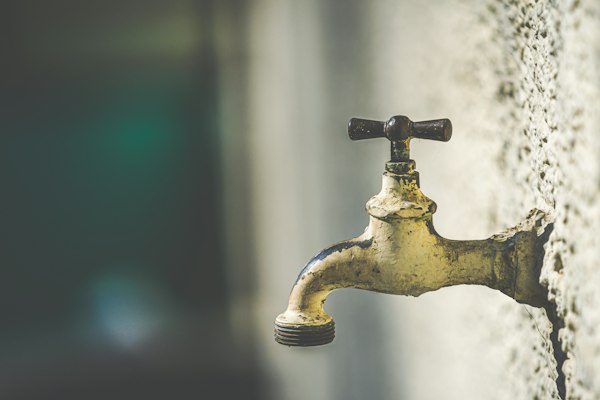
"Sudden and Accidental" Are the Three Words Your Water Claim Will Be Decided On
Water claims have the highest denial rate of any homeowners claim. Learn how adjusters read a leak and the dated record that changes the outcome.
Most water claims don't get denied because the damage wasn't real. They get denied because of how long the damage took to happen. Industry reporting puts the denial rate for water claims at roughly 10%, the highest of any homeowners claim type, and the dispute almost always comes down to three words in your policy: sudden and accidental.
Water claims are also expensive. The Insurance Information Institute's five-year average for a water damage claim was about $15,400 for 2019 through 2023. That is a lot of money to have decided by a phrase you probably never read.
What the policy actually says
A standard homeowners policy covers water damage that is "sudden and accidental." A pipe bursts. A supply line snaps. The water heater fails overnight. Those are covered, subject to your deductible.
Underneath that covered peril sit the exclusions. Most policies exclude continuous or repeated seepage or leakage over a period of time, wear and tear, deterioration, rust and corrosion, and damage caused by neglect or lack of maintenance. Wording varies by policy and by state, so read the exact language in yours.
Here is the logic carriers are working from. A policy insures unexpected events. It can't insure a slow failure that a routine repair would have prevented, or the cost of every home would climb to cover deferred maintenance. That is a reasonable line. The gap is that the policy draws it in two sentences, and nobody tells you how it gets applied to your kitchen floor.
Here's what most people don't know: even when the leak is sudden, the damage it caused can be split. Many adjusters will pay for the burst but deny the rot or mold that was already there. The line runs through the damage, not just the event.
How an adjuster reads a water loss
An adjuster arrives after the fact. They can't see the leak start, so they read the evidence it left behind.
They look for staining rings on ceilings and cabinet floors, because rings mean repeated wetting. They look for mineral deposits and white crust on pipe fittings, which build up over months. They look at corrosion on the failed part. A pipe that burst cleanly looks different from a joint that has been weeping green for a year. They check for soft or darkened subfloor, mold growth, and warped baseboards.
Then they ask the question that matters most: when did you first notice?
That question is where many claims turn. If you saw a stain in July and called in October, the carrier can argue the loss was not sudden and that you let it continue. If you can't say when you last saw that wall dry, the adjuster fills in the answer with the evidence they have. Without a record, the physical evidence becomes the whole story.
The six leaks that get denied most
Some sources of water loss are hard to call sudden, because they usually develop slowly. These are the ones that run into the exclusion most often:
- Slab leaks. A pinhole in a line under the foundation often runs for months before it shows up as a hot spot or a bill.
- Shower pans and tile. Failed grout or a cracked pan seeps into the subfloor below.
- Roof flashing. Water that tracks along a roof penetration rots decking long before a ceiling stains.
- Window seals. Slow intrusion at a sill is typically treated as maintenance.
- Under-sink supply lines and drains. A slow drip inside a cabinet is the classic gradual loss.
- HVAC condensate drain lines. A clogged line overflows a little at a time, often into a ceiling or closet nobody checks.
The common thread is that each one is hidden, slow, and fixable. That is exactly the profile the exclusion was written for. It is also why a record of the last time someone looked matters so much.
What a denial letter cites, and what an appeal needs
A denial letter usually quotes three things: the policy exclusion (seepage, wear and tear, or maintenance), a finding from the inspection (staining, corrosion, or mold), and sometimes the timeline you gave on the phone. Read it for the specific language. It tells you which argument the carrier is making.
An appeal works when it answers that argument with dated evidence. If the letter says the leak was long-term, you need proof of when the area was last dry. If it says the damage resulted from lack of maintenance, you need proof of maintenance. A plumber's report on the failed part, photos with timestamps, past invoices, and any sensor alert history all count. A statement that "it was fine as far as I knew" does not carry the same weight.
You can also ask for the carrier's inspection report and the engineer's findings in writing. Many states give you a right to a copy of the claim file, and a written explanation of the denial is usually required. If the dollar amount is large, a licensed public adjuster or an attorney who handles property claims can review it. Appeals filed with documentation get further than appeals filed with frustration.
The record that changes the answer
Almost every denial in this category has the same missing piece: proof of the home's condition before the loss. The carrier has the damage. You usually don't have the "before."
A dated record fixes that. Photos of the supply lines under each sink, the water heater and its connections, the washing machine hoses, the shower and tub surrounds, and the HVAC drain line, taken once a season, turn "we can't tell how long this leaked" into "this was inspected in April and dry." Keep the invoice any time a plumber or roofer touches something. Keep the date you replaced the hoses.
This also helps in the other direction. Carriers are better positioned to pay a claim when the file shows the home was cared for. A homeowner with a documented maintenance history is easier to cover, and a claim from that homeowner is easier to settle. Both sides benefit from the same record.
Leak sensors and shutoffs: the device that timestamps "sudden"
A leak sensor does two jobs. It limits the damage by alerting you within minutes. It also creates a timestamped record of when water first appeared, which is direct evidence that the event was sudden.
An automatic shutoff valve goes one step further. It closes the main supply when it detects a leak or abnormal flow, so a failed line floods one room instead of three floors. Many carriers offer a premium discount for professionally installed or monitored water protection devices. The size of the discount varies by carrier and state, so ask your agent for the exact figure before you buy.
Protective devices are the discount lever you control most directly. A device that is installed but not documented earns nothing at renewal. The invoice, the model, the installation date, and the alert history are what turn a gadget into a credit.
A twenty-minute water walk-through, once a season
You can build the record without hiring anyone. Set a recurring reminder for the first week of each season and spend twenty minutes on it.
Check under every sink and photograph the supply lines and the cabinet floor. Look at the water heater base and the pan under it. Check the washing machine hoses and the dishwasher connection. Look at ceilings below bathrooms for new stains. Inspect the HVAC drain line and the area around the air handler. Walk the exterior and look at window sills, flashing, and downspouts. Take a dated photo of each. Save them in one place with a one-line note: "Oct 13, all dry."
It won't prevent every leak. It will change what you can prove about every leak that does happen.
Your next step
Do the walk-through this week, and do it with a system, not a camera roll. Rafter's AI-powered home risk assessment looks at the same places an adjuster would, including supply lines, water heater, roof penetrations, and drain lines, and turns what it finds into a prioritized mitigation plan. Every finding is dated and stored in your home record, along with your repair invoices and protective device documentation. If a water claim ever comes, you aren't reconstructing the past from memory. You are handing over the file.
Rafter also helps you document and qualify for protective device discounts on leak sensors and shutoffs, so the devices that protect your home also show up in your premium. Start your assessment at rafterhome.com, and have the first dated record in place before the next storm or hard freeze.