Why Home Maintenance Records Are Now Your Most Valuable Insurance Asset
A single phrase in your policy can deny a claim you expected covered. Home maintenance records are the evidence that wins those disputes.

Most homeowners know they need insurance. Far fewer know that a single phrase buried in nearly every policy can be used to deny a claim they expected to be covered: failure to maintain. No receipt for a repair. No record of an inspection. No documentation that you knew about a problem and addressed it — and your carrier has a legitimate basis to call the damage a maintenance issue rather than a covered loss.
This isn't a technicality that rarely gets invoked. It's one of the most common reasons homeowners insurance claims are disputed or denied. And with insurers under increasing pressure from rising loss ratios, adjusters are scrutinizing claims more carefully than ever. The homeowners who win those disputes are the ones who come in with paper.
The Hidden Clause That Lets Insurers Deny Claims Over Maintenance
Every standard homeowners policy includes a maintenance exclusion. The language varies by carrier, but the intent is consistent: insurance covers sudden and accidental damage, not the predictable results of neglect or deferred upkeep. If a pipe bursts because of a freeze, that's a covered event. If a pipe slowly corrodes for years until it fails, that's a maintenance issue — and it may not be covered.
The practical problem is that adjusters don't always know which situation they're looking at. When they can't tell, the tie often goes to the carrier. A roof leak could be storm damage or the result of years of deferred maintenance. An HVAC failure could be an unexpected breakdown or the logical endpoint of a system that hadn't been serviced in a decade. Without a maintenance record, you're relying on the adjuster to give you the benefit of the doubt.
Here's what most homeowners don't know: the documentation that protects you in these situations doesn't have to be extensive. A basic, consistent record of maintenance activity — dates, what was done, who did it — is often enough to shift the outcome of a disputed claim in your favor.
What "Neglect" Actually Means in an Insurance Context
Insurance companies define neglect as damage that a reasonable homeowner could have prevented with routine upkeep. That definition is intentionally broad, which is why documentation matters so much.
A few examples that illustrate how this plays out in practice:
- A water heater that fails after 12 years with no service history is far more likely to be classified as a maintenance issue than one with annual inspection records.
- A roof that shows granule loss and minor leaking can be framed as storm damage — or as years of accumulated wear — depending on what condition records exist.
- An appliance supply hose that bursts can be deemed sudden and accidental if it was in good condition, or predictable neglect if the hose was visibly cracked and had never been replaced.
The key insight is that insurers aren't required to prove you neglected your home. They only need to show that the damage could have resulted from neglect and that no evidence exists to counter that conclusion. Documentation creates that counter-evidence.
The 6 Systems That Generate the Most Documentation-Related Disputes
Not every part of your home carries equal weight when it comes to claims disputes. Based on how adjusters evaluate damage and how maintenance exclusions get applied, these six systems are where documentation pays off most directly.
Roof. The single highest-stakes system for documentation purposes. Age and maintenance history drive more claim disputes — and more non-renewals — than any other factor. A roof with no service records looks the same to an adjuster as a neglected roof, even if it isn't.
Plumbing. Water damage accounts for nearly 30% of all homeowners insurance claims and the average payout exceeds $13,000. Plumbing failures are among the most scrutinized, precisely because gradual leaks are categorically excluded while sudden pipe failures are covered.
HVAC. Heating and cooling systems deteriorate gradually. An HVAC failure caused by a manufacturing defect looks identical to one caused by deferred maintenance — unless you have service records showing regular filter changes, annual inspections, and any repairs completed over the life of the unit.
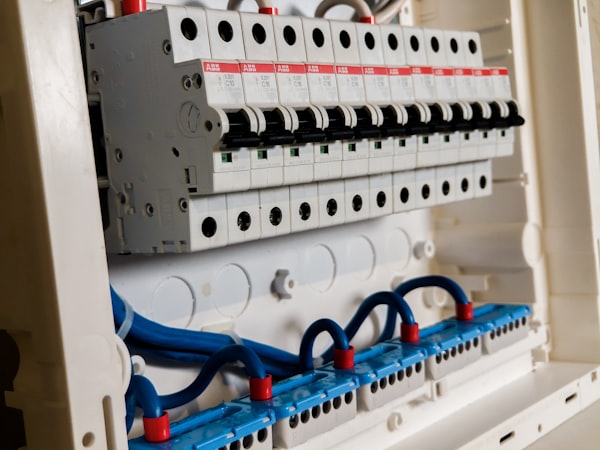
Electrical. Older wiring and panel issues are both safety hazards and coverage risks. Insurers increasingly require documentation of electrical system condition as homes age, and claim denials tied to "known deficiencies" are common when no inspection history exists.
Water heater. Most water heaters are replaced every 8–12 years. An aging water heater that fails without any service history will often be classified as a maintenance issue rather than a covered loss. Annual anode rod inspections and flush records can make a meaningful difference.
Appliance connections. Washing machine supply hoses, refrigerator ice maker lines, and dishwasher connections are responsible for a disproportionate share of interior water damage claims. These are inexpensive to maintain and inspect — but if no records exist when one fails, expect scrutiny.
What Good Maintenance Records Actually Look Like
Good records don't require a complex system. They require consistency. Here's what actually holds up in a claim dispute:
Date and description. For every maintenance task — whether you did it yourself or hired a contractor — record the date, what was done, and the condition you found before and after. "Replaced washing machine supply hose, noted original hose was 9 years old with no visible cracking, replaced as preventive measure" is a far more valuable record than just a contractor invoice.
Contractor invoices and receipts. Keep every receipt for repairs, inspections, and upgrades. These are your first line of evidence in a dispute. If a contractor visits your home, ask for a written summary of what they found and what they did.
Inspection reports. Any professional inspection — roof, HVAC, plumbing, pest — should be saved in full, not just the summary page. Adjusters want to see what condition the system was in, not just that an inspection happened.
Photos with timestamps. Before and after photos of significant maintenance work add context that written records can't fully capture. Most smartphones automatically timestamp photos. A quick photo of a repaired area, a new supply hose, or a cleaned gutter costs nothing and provides meaningful documentation.
Manufacturer documentation. Keep appliance manuals and installation records. These establish the age, expected lifespan, and maintenance requirements of your systems — all relevant if a carrier tries to characterize a failure as inevitable wear.
How Long to Keep Records — and How to Store Them
The simplest rule: keep home maintenance records for as long as you own the property. When you sell, a documented maintenance history is also a selling point — buyers and their inspectors notice when a home has been well-maintained and the records exist to prove it.
For records tied to specific claims or disputes, hold onto everything for at least seven years after the matter is resolved. Statutes of limitations on insurance disputes vary by state, and some claims can resurface long after you expect them to be closed.
Where you store records matters almost as much as whether you have them. Physical records in a fireproof, waterproof container protect against the exact events — fires, floods, storms — that generate insurance claims in the first place. Digital copies stored in cloud backup provide a redundant layer. Ideally, maintain both.
Avoid the common mistake of keeping records somewhere that only one person in the household can access or locate. If something happens while you're traveling, your partner or another family member may need to produce documentation quickly. A shared digital folder with consistent naming conventions is one of the simplest systems you can build.
Turning Reactive Maintenance Into a Proactive Protection System
Most homeowners do maintenance reactively — something breaks, they fix it, maybe they keep the receipt. That's better than nothing, but it misses the protective value of a record that precedes a problem.
The most defensible maintenance history isn't just a collection of repair receipts. It's a documented pattern of proactive upkeep: inspections done before problems emerged, hoses replaced before they failed, HVAC serviced before performance dropped. That kind of record tells a clear story to any adjuster: this is a homeowner who stayed ahead of their home, not one who ignored it until something went wrong.
Building that kind of record starts with understanding which systems in your specific home carry the most risk — and making sure those systems get prioritized attention. An older plumbing system needs more frequent documentation than a new one. A roof approaching 15 years needs a recent inspection record far more than a newer roof does. Risk isn't uniform across homes, which means maintenance priorities shouldn't be either.
Rafter's AI-powered home assessment does exactly this: it evaluates your home's specific risk profile and generates a prioritized maintenance plan tied to the systems and conditions that matter most for your coverage. The result isn't a generic checklist — it's a living record of your home's condition that you own, that grows with every update, and that you can bring to any claims conversation as documented evidence of proactive care. If you've never thought of your maintenance records as insurance in their own right, now is the time to start.