Lightning Claims Now Average $26,616 — and Your Electronics Are the Reason
Lightning is covered — but the average claim just hit $26,616. Two cheap steps decide whether yours pays out in full or gets shortchanged.
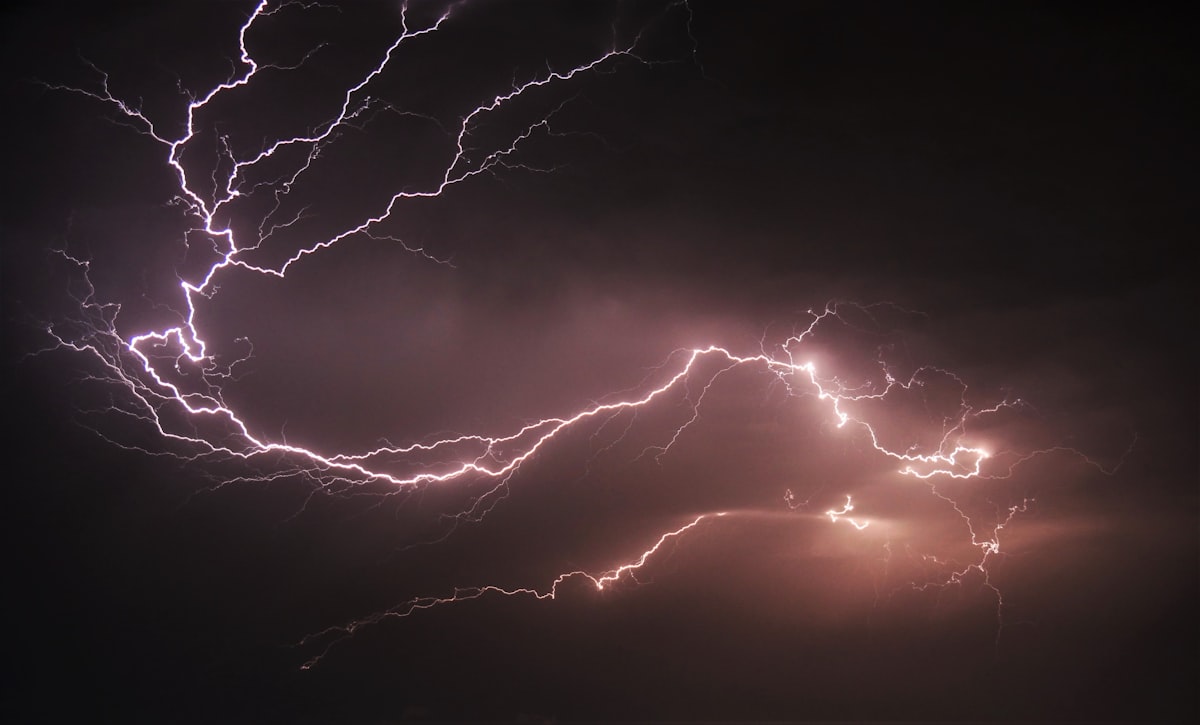
A single lightning strike now does more financial damage to the average home than it did just a year ago — not because storms got worse, but because everything the strike touches got more expensive to replace. In 2025, insurers paid an estimated $1.65 billion in lightning-related homeowners claims, and the average claim jumped nearly 43% to $26,616. The number of strikes barely moved. What moved was the value of what lightning destroys inside your walls.
Here's the part the news coverage skips: lightning damage is almost always a covered peril. The frustration doesn't come from denial — it comes at claim time, when you're asked to prove what a surge fried and that the damage wasn't already there. Two cheap, boring steps decide whether that conversation goes your way.
Why the Average Lightning Claim Jumped 43% in One Year
The Insurance Information Institute's June 2026 report tells a counterintuitive story. Claim frequency rose modestly — up 11.6% to 61,986 claims. Claim severity is what exploded, pushing the average payout from $18,637 in 2024 to $26,616 in 2025. In other words, roughly the same number of homes got hit, but each hit cost far more to make whole.
The reason is sitting in your outlets. A modern home carries more surge-vulnerable value than any home in history: smart electrical panels, EV chargers, heat-pump systems, connected appliances, home networking gear, solar inverters, and a rack of electronics in nearly every room. A surge doesn't politely destroy one television anymore — it can cascade through a whole home's connected systems in a fraction of a second. Layer inflation on top of labor, materials, and reconstruction costs, and the bill for rebuilding that electrical ecosystem climbs fast. Regional data underscores it: in the highest-severity states, average lightning claims run north of $60,000.
This is a systemic shift, not a fluke. The value density of the American home has outrun the way most people protect it.
What Your Policy Covers: Direct Strikes vs. Power Surges
Standard homeowners policies treat lightning as a named, covered peril — so a direct strike that damages your roof, starts a fire, or destroys wiring is generally covered under your dwelling and personal property coverage, subject to your deductible.
The gray zone is the power surge. Lightning doesn't have to hit your house to hurt it. A strike on a nearby line, transformer, or the ground can send a voltage spike through the grid and into your home, frying electronics without leaving a scorch mark. Most policies cover surge damage when it traces back to a lightning event — but they typically exclude surges caused by the utility's own equipment or routine grid fluctuations. And personal electronics often carry sub-limits, meaning your policy caps what it will pay for that category regardless of what you lost.
What most homeowners don't realize: the coverage question is usually the easy part. The hard part is the two things you have to demonstrate after the fact — that the loss happened, and that it happened the way you say it did.
The Whole-Home Surge Protector: $300 Against a $26,000 Loss
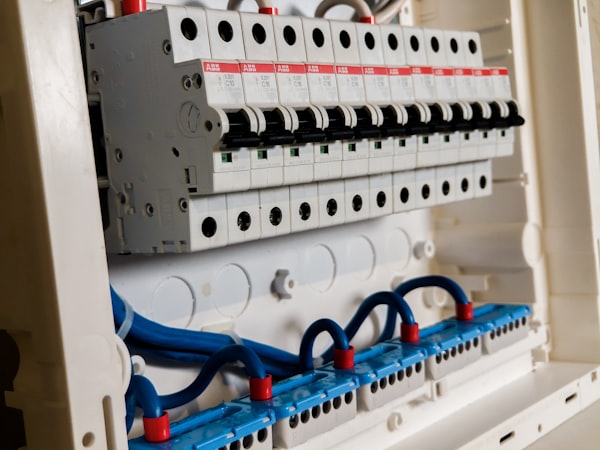
The single highest-leverage move here is also the cheapest. A whole-home surge protector installs at your electrical panel and clamps down voltage spikes before they reach the circuits feeding your home. Installed, most homeowners spend somewhere in the range of $200 to $700 — commonly around $300 — for a device that stands between a routine summer storm and a five-figure claim.
Two things make this Rafter's favorite kind of upgrade. First, it prevents the loss outright, which beats any claim outcome. Second, a number of carriers recognize a professionally installed surge protection system as a protective device and will credit it at renewal, the same category that captures water-leak sensors and monitored alarms. The discount alone won't retire the device cost overnight, but it changes the math: you're paying once for hardware that lowers both your risk and your premium every year it's in place.
Panel-level protection isn't a substitute for point-of-use protectors on your most sensitive equipment — think of it as the first line of defense, with plug-in units backing it up on the electronics you'd hate to lose. Together they're the difference between a surge that trips a breaker and a surge that empties a room.
Proving the Loss: Why Surge Claims Get Shortchanged
This is where covered claims quietly turn into partial payouts. When a surge destroys electronics, there's rarely dramatic visible damage — no hole in the roof, no water line on the drywall. So the adjuster's questions get pointed: What exactly was damaged? What was it worth? How do we know the strike caused it, and that the unit wasn't already failing?
Without answers on paper, you're negotiating from memory against a professional whose job is to pay the documented amount, not the remembered one. Depreciation gets applied aggressively. Items you can't substantiate get trimmed off the estimate. A legitimate $20,000 loss becomes a $9,000 check because two-thirds of it couldn't be proven. The coverage was never the problem — the evidence was.
This isn't carriers acting in bad faith. It's a structural information gap: no one ever told homeowners that the paper trail decides the payout. The homeowners who come out whole are simply the ones who documented before the storm, not after.
The Pre-Strike Inventory That Makes the Claim Easy
The fix is a dated inventory of the systems and electronics a surge would threaten, created while everything works. At minimum, capture: your electrical panel and any surge protection already installed; major connected systems (HVAC, EV charger, solar equipment, smart panel); and the high-value electronics in each room, with model numbers and, where you have them, purchase records.
Photograph the equipment and its serial or model plate. Note install or purchase dates. Store it somewhere that survives the event itself — not on a device sitting in the same house. That single folder answers every question an adjuster can ask: what you had, what it was worth, and that it was functioning before the strike. It converts a contested surge claim into a paperwork exercise.
The same record does double duty at renewal. When you can show a documented, well-maintained home with protective devices in place, you're giving your insurer a reason to price you as the lower-risk home you actually are.
Thunderstorm Season Checklist: Panel, Plugs, and Paper Trail
Peak thunderstorm season is here, which makes the next two weeks the right window to close the gap. In order of impact:
- Panel: Have a whole-home surge protector installed at your electrical panel, and ask your insurer whether it qualifies as a creditable protective device.
- Plugs: Add point-of-use surge protectors on your highest-value or hardest-to-replace electronics as a second layer.
- Paper trail: Build the dated, photographed inventory of your electronics and connected systems, and store a copy off-site or in the cloud.
None of this requires waiting for a storm to teach you the lesson. It requires an afternoon.
Turn a Coverage Answer Into a Plan
Knowing lightning is covered doesn't protect you — knowing exactly which devices lower your risk, which ones your carrier will credit, and how to document the loss before it happens is what protects you. That's the work Rafter does. Our AI-powered home risk assessment identifies your home's specific surge and storm exposures, tells you which protective devices your carrier will actually recognize for a discount, and helps you build the dated documentation that makes a claim straightforward instead of adversarial.
Start with your electrical panel this week: find out whether a whole-home surge protector qualifies for a protective device credit on your policy, and get your electronics inventory on paper before the next storm. If you want it done systematically — the assessment, the discount-qualifying device list, and the documentation, in one place — get your Rafter home risk assessment and turn thunderstorm season into a solved problem rather than a $26,000 gamble.