Leaving for Vacation? What Your Home Insurance Expects While You're Gone
Vacation-proof your home insurance: the water shutoff, thermostat, security, and documentation steps that keep a claim from being challenged.
Every summer, homeowners lock the front door, load the car, and drive away from the single scenario their insurance policy worries about most: an empty house with the water still on. Roughly 1 in 60 insured homes files a water damage or freezing claim each year, and the average payout runs close to $14,000 — but a leak that runs undetected for a week while you're at the beach can multiply the damage and complicate the claim itself. What your policy expects from you while you're away is spelled out in fine print that almost nobody reads before a trip. Here's how to leave town with your coverage intact.
The Unoccupied-Home Problem Nobody Reads in Their Policy
Standard homeowners policies quietly distinguish between three states of your house: occupied, unoccupied, and vacant. A typical two-week vacation leaves your home unoccupied — furnished and lived-in, just temporarily empty. Cross roughly 30 to 60 consecutive days (the threshold varies by policy), and many policies treat the home as vacant, at which point coverage for water damage, theft, and vandalism can shrink dramatically or disappear.
Here's what most people don't know: you don't need to hit the vacancy threshold to have a claim challenged. Most policies cover sudden and accidental water discharge but exclude gradual damage and losses attributed to neglect. A supply line that lets go the day after you leave and drips for ten days can be reframed as a gradual loss — not because anyone is acting in bad faith, but because the adjuster has no evidence of when the leak started or what condition the home was in when you left. That's an information gap, and it's one you can close before you ever pull out of the driveway.
Water: The One System to Shut Down Before You Lock the Door
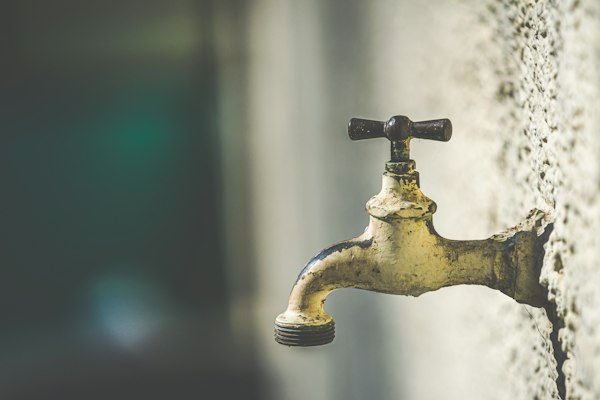
Water is the peril that turns vacations into claims. Typical water damage repairs run $2,000 to $6,000, severe events climb past $100,000, and the average insurance payout for water damage and freezing claims is about $13,954. Nearly all of that risk disappears with one motion: closing your main water shutoff valve before you leave.
If shutting off the main isn't practical — irrigation systems, a house sitter, a pet fountain — close the individual supply valves behind the highest-risk fixtures instead: the washing machine, dishwasher, ice maker, and toilets. Set your water heater to vacation mode so it isn't heating a tank for an empty house.
Then add the layer insurers increasingly reward: leak sensors and automatic shutoff valves. Sensors under sinks and behind appliances alert your phone at the first drip; a smart shutoff valve on the main line detects abnormal flow and closes it automatically. Many carriers offer premium discounts in the 2–10% range for these devices, and some carrier partnership programs go further. A device that acts in seconds does what you can't do from 900 miles away — and it converts your absence from a liability into a non-event.
Thermostat, Humidity, and the Greenhouse Effect of a Closed House
Turning the air conditioning completely off feels thrifty. In summer, it's a mistake. A sealed house with no air circulation becomes a greenhouse: interior temperatures climb, humidity spikes, and within days you can have condensation, warped wood floors, and mold growth — a loss category most policies cap at low limits or exclude when it develops gradually.
Set the thermostat between 78°F and 82°F instead. That's warm enough to keep energy use modest but cool enough to keep humidity in check. If you have a smart thermostat, enable remote monitoring so a failure shows up on your phone rather than at your homecoming. In humid climates, running a dehumidifier with a drain line — or setting your HVAC fan to circulate periodically — is cheap insurance for everything made of wood, fabric, and drywall in your house.
Theft Deterrence That Insurers Actually Credit
Burglaries peak in exactly the months you're most likely to travel — June through August, running roughly 11% higher than winter. Insurers know this, which is why security is one of the few areas where they put explicit discounts on the table.
A monitored alarm system typically earns a meaningful premium discount — commonly 2–15% depending on the carrier and system. Smart locks, doorbell cameras, and lighting on randomized timers add deterrence that doesn't depend on you remembering anything. The old-school moves still matter too: hold your mail, don't broadcast the trip on social media until you're back, and ask a neighbor or friend to walk through every few days. That last one does double duty — it deters break-ins and shortens the time any loss goes undetected, which directly strengthens a future claim.
If you've been meaning to install security or leak protection anyway, do it before the trip and tell your insurer. The discount starts working immediately; so does the protection.
The Day-of-Departure Documentation Habit
This is the step that separates a covered claim from a dispute, and almost no one does it. Before you lock the door, spend ten minutes on a phone-video walkthrough of your home: under every sink, the ceilings, the water heater, the washing machine hookup, the thermostat display, the closed main valve, the armed alarm panel.
That timestamped record establishes two things an adjuster otherwise has to guess at: the home was in sound condition when you left, and you took reasonable care before leaving. If a pipe fails on day three of your trip, your video is evidence the loss was sudden — not a slow leak you'd been ignoring. It also refreshes your contents documentation, which matters more than most homeowners realize: the majority of American households are significantly underinsured on personal property and struggle to produce proof of loss after a theft or major damage event.
Your Printable Insurance-Proof Departure Checklist
Run this list the day you leave:
- Shut the main water valve — or close supply valves at the washer, dishwasher, ice maker, and toilets.
- Set the water heater to vacation mode.
- Set the thermostat to 78–82°F and enable remote alerts if your thermostat supports them.
- Confirm leak sensors and auto-shutoff are active and connected to your phone.
- Arm the alarm and verify monitoring is live.
- Hold mail and packages; put lights on timers.
- Arrange a walkthrough every 2–3 days by someone you trust — longer absences may require it under your policy.
- Record a dated video walkthrough of plumbing, ceilings, appliances, and settings on your way out.
Leave Town With a Record, Not a Hope
Every step above works better when it's built on an accurate picture of your specific home — where your shutoff valves are, which supply lines are aging, which protective devices your insurer will actually credit. That's what Rafter does. A Rafter AI-powered home risk assessment maps your home's real risk profile, generates a prioritized mitigation plan (including the leak sensors, automatic shutoff valves, and security devices that qualify for premium discounts), and keeps a dated documentation record of your home's condition — so the evidence that protects your claim exists before you ever need it.
Before your next trip, get your home assessed at rafterhome.com. Ten minutes of setup now is the difference between a covered claim and a conversation you don't want to have from a hotel room.